



EntertainmentSouth Korea
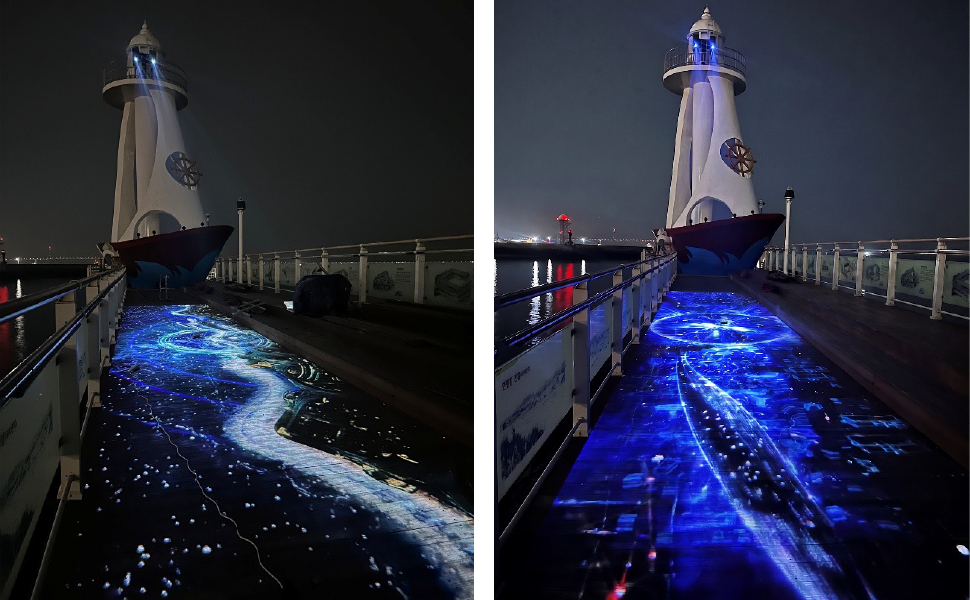
Media Façade Installation at Incheon Port North Breakwater Lighthouse
- Installed system:
- Media Façade
- Location:
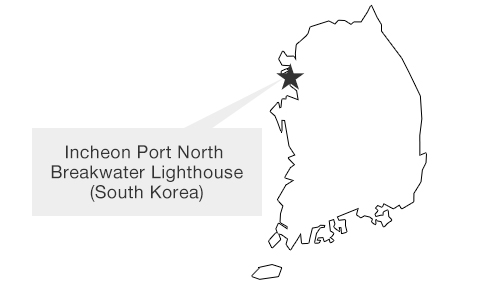
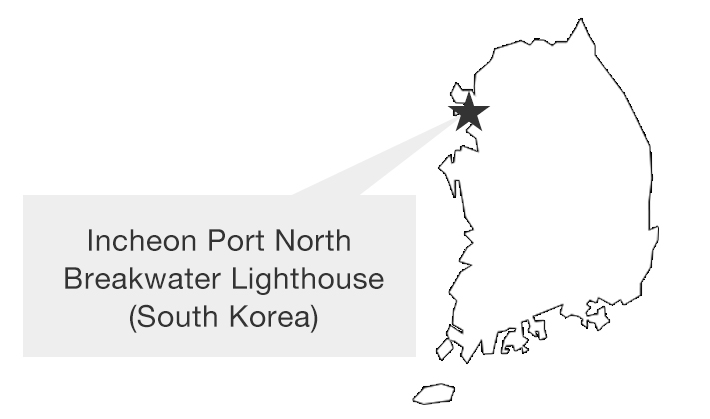
- Incheon Port North Breakwater Lighthouse, Incheon, Republic of Korea
Challenge
The Incheon Port North Breakwater Lighthouse presented a unique installation environment with extremely limited equipment space and no suitable area for a dedicated server room. Installing a separate outdoor rack enclosure was also difficult. In addition, due to the nature of the breakwater location, immediate on-site access by maintenance personnel in the event of a system issue could not always be guaranteed.
Therefore, the project required a space-efficient and highly reliable system capable of stable, long-term media façade content playback while minimizing the need for a conventional PC-based media server and peripheral equipment.
Solution
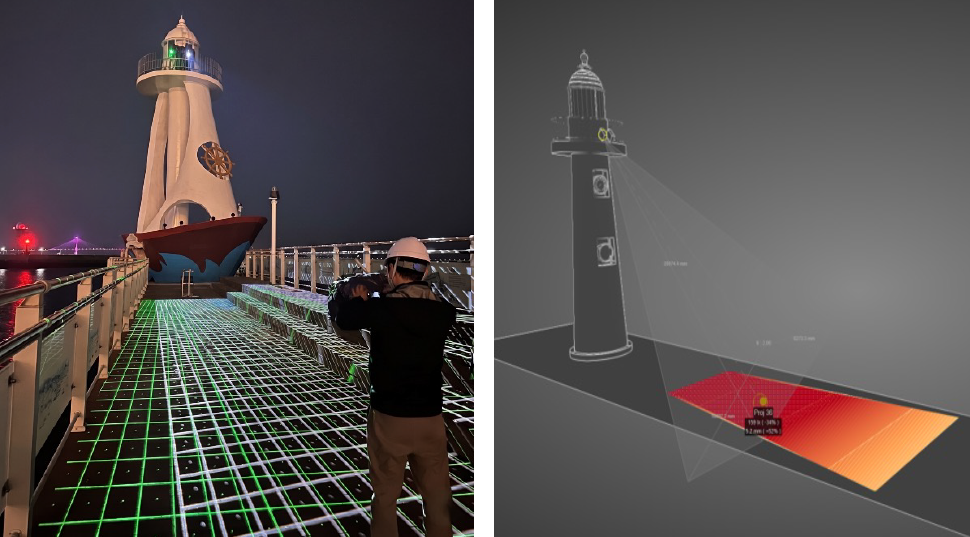
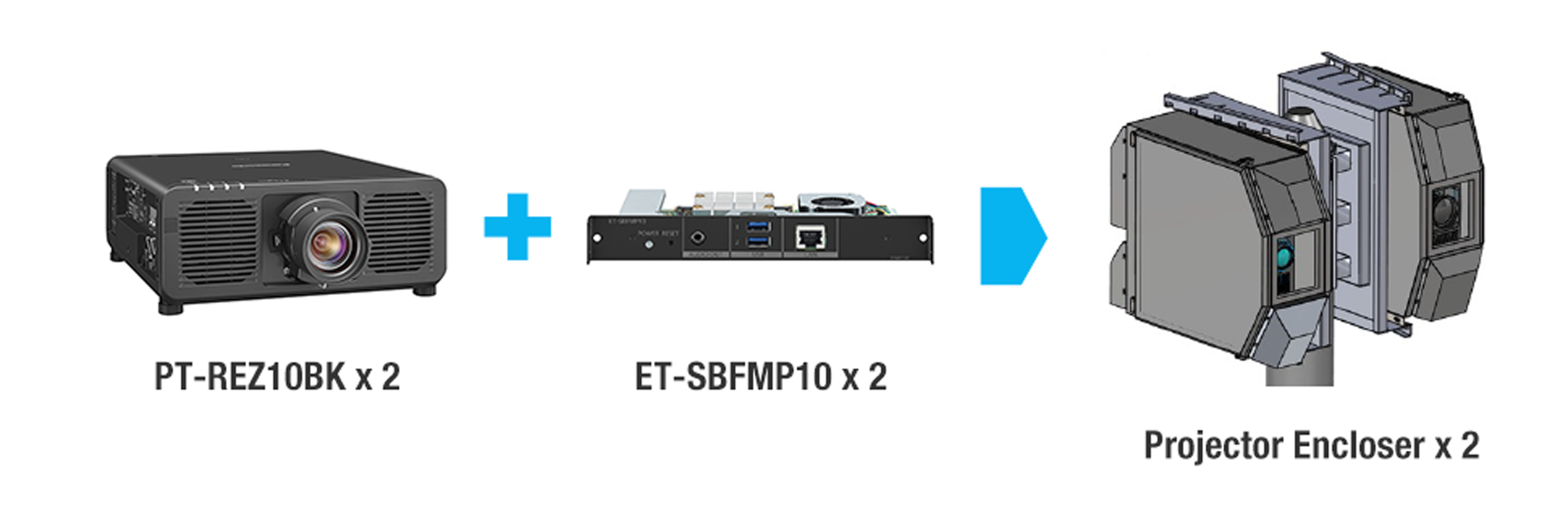
Two Panasonic PT-REZ10 laser projectors and two ET-SBFMP10 optional board-type media processors, which can be installed directly into the projector’s expansion slot, were deployed.
By installing the ET-SBFMP10 directly into each projector, the system was designed to play media content without requiring a separate media server or server rack. This approach made efficient use of the limited installation space while reducing the amount of equipment and cabling required between the media server and projectors, resulting in a simpler installation and maintenance structure.
In addition, integrating both the projectors and media processors within a single Panasonic solution enhanced system compatibility and maintenance convenience while providing a stable, hardware-based content playback environment.
Transforming a Maritime Safety Facility into a New Nighttime Landmark
Since it was first illuminated in 1977, the Incheon Port North Breakwater Lighthouse has supported the safe navigation of vessels entering and leaving Incheon Port for decades.
The lighthouse was later renovated as Wolmi Light Lighthouse, a sculptural lighthouse inspired by the shape of a sailing boat. Through this transformation, the facility has evolved beyond its traditional role as a navigational aid to become a new maritime tourism attraction offering visitors a distinctive visual experience.
A photo zone, landscape lighting, and media façade elements were incorporated into the lighthouse to create a new nighttime landscape that harmonizes with surrounding maritime facilities and tourist attractions.
The Panasonic projection system was introduced to bring media art content combining light and imagery to the lighthouse and breakwater environment.
System Design Optimized for Limited Installation Space
A conventional media façade system typically consists of a PC-based media server for content playback, a rack to house the server, and additional signal equipment and cabling connecting the server to the projectors.
At this site, however, there was no dedicated server room, and the available equipment space was extremely limited. Installing an additional rack enclosure outdoors was also challenging.
Under these conditions, adding a separate server and peripheral equipment would have increased not only the required installation space but also the burden of equipment protection and maintenance. In particular, facilities located along coastal areas and breakwaters are generally more difficult to access than conventional indoor installations. Therefore, simplifying the overall system architecture and minimizing potential points of failure were important considerations.
The ET-SBFMP10 is an optional board-type media processor that can be installed directly into the projector. Because it does not require a separate installation space for a media server, content playback can be implemented without securing additional space for a server or rack.
This approach reduces the number of devices and interconnecting cables required, enabling a simpler and more efficient overall system configuration.


Optional Board-Type Media Processor Installed Directly
into the Projector
The ET-SBFMP10 is a media processor designed to be inserted directly into the expansion slot of compatible Panasonic projectors. Instead of installing a separate external media server, content playback functionality can be integrated directly into the projector, minimizing both installation space and the number of system components.
For this project, two PT-REZ10 projectors and two ET-SBFMP10 media processors were deployed, with one media processor installed in each projector.
By integrating the media processor directly into each projector, an independent content playback environment was created without the complex connection architecture typically required between an external media server and projector.
This configuration offers significant space efficiency not only for facilities where server rooms or equipment rooms are difficult to secure, but also for outdoor environments where external rack installation is restricted and for compact media façade projects.
Enhanced Operational Stability Through a Hardware-Based System
At remote or difficult-to-access sites, preventing unexpected system failures is often more important than responding quickly after an issue occurs.
Conventional Windows-based media servers may experience changes in the playback environment or unexpected errors due to operating system updates, graphics driver updates, or changes to graphics card settings. In addition, systems consisting of multiple devices such as servers and projectors may occasionally encounter signal recognition or content playback issues depending on the sequence in which the equipment is powered on or off.
The ET-SBFMP10 uses dedicated hardware for content playback, eliminating variables associated with Windows updates or changes to graphics card settings. It also reduces the possibility of operational issues related to the power-on sequence of separate servers and display devices, allowing the system to operate reliably without requiring complex daily procedures by on-site personnel.
This architecture is particularly effective in reducing operational risks at locations such as breakwaters, where permanent maintenance personnel may not be present and immediate access to the equipment can be difficult.
Simplified Maintenance Through an Integrated Panasonic Solution
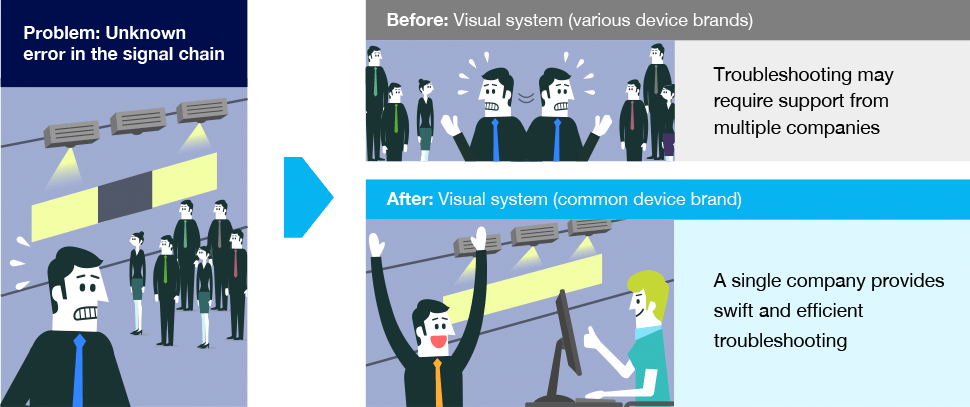
When projectors and media servers from different manufacturers are combined within the same system, identifying the source of a problem can become more complicated. In some cases, technical support may need to be coordinated separately with multiple manufacturers, potentially increasing the time required for troubleshooting and maintenance.
For this project, both the Panasonic projectors and Panasonic media processors were integrated into a single system.
This configuration ensures compatibility between system components and enables the entire projection system to be inspected and supported within a unified service framework.
For outdoor public facilities with limited accessibility, long-term maintenance convenience and an efficient support structure are just as important as the initial performance of the equipment. A single-brand system architecture helps simplify maintenance points and reduce the operational burden on facility managers.
A Media Façade Solution Designed to Minimize Space and Maintenance Requirements
The Incheon Port North Breakwater Lighthouse media façade project was designed with careful consideration of limited installation space, site accessibility, and long-term operational stability.
The combination of the PT-REZ10 and ET-SBFMP10 enables media content playback without requiring a dedicated server room or external media server, maximizing the efficient use of available space. The simplified equipment configuration and reduced cabling, together with a stable hardware-based playback environment, also help minimize potential system issues and maintenance requirements.
This project demonstrates that successful media façade design requires consideration not only of brightness and visual performance, but also of the actual installation environment, operational requirements, and long-term maintenance strategy.
Panasonic’s integrated projection solution provides a reliable platform for delivering immersive nighttime visual content even in environments where installation space is limited and immediate on-site access can be challenging.
Equipment installed
-
Location
-
Related information
